Homecoming is supposed to be about coming home.
The reunions. The music. The food. The vendors. The familiar faces. The celebration of culture, community, and everything that makes our HBCUs special.
As a proud graduate of Florida A&M University (FAMU), Homecoming holds a special place in my heart. It’s more than a football game. It’s a family reunion, a cultural experience, and an economic engine for the surrounding community.
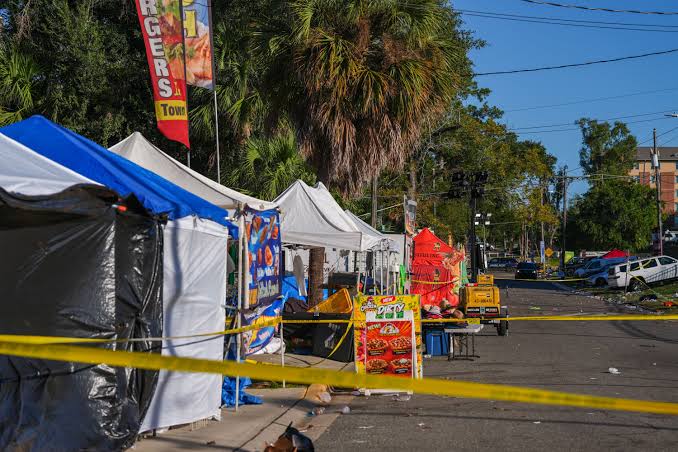
That’s why the shooting that occurred near FAMU’s campus on Saturday, October 24, 2026, hit differently.
What should have been a weekend of celebration became a traumatic experience for families, students, alumni, visitors, and local businesses. According to reports, 12 people were injured, including six minors, following an altercation that escalated into gunfire near Bragg Memorial Stadium.
First and foremost, my thoughts and prayers are with those injured, their families, and our entire Rattler community.
But as someone who has spent nearly three decades in the insurance industry, I couldn’t help thinking about another group affected by incidents like this.
The small business owners who were simply trying to make a living.
Because when violence disrupts a community, the damage doesn’t stop when the police tape comes down.
Your Business Doesn’t Have to Be the Target to Become a Victim
Let’s talk about something many small business owners don’t consider until it’s too late.
You can do everything right. Secure your permits. Pay your vendors. Hire your employees. Open your doors. And still find yourself dealing with a financial loss because of something that happened outside your business.
Think about the food vendor who invested thousands in inventory for Homecoming weekend. Or the boutique owner counting on increased foot traffic. Or the restaurant that staffed up, ordered extra food, and prepared for one of its busiest weekends of the year.
Then, suddenly, gunshots ring out.
Customers scatter. Streets close. Events end early. Businesses shut their doors.
And just like that, the revenue you were counting on disappears.
Here’s the million-dollar question: Does your insurance cover that?
The answer might surprise you.
Five Risks Every Small Business Owner Should Understand
1. Business Interruption: When the Money Stops Coming In
Many business owners believe that if they have Business Interruption Insurance, they’re covered whenever something forces them to close.
Not necessarily, Sis. Not necessarily, Bro.
Most traditional Business Income coverage requires direct physical loss or damage to insured property caused by a covered peril.
So, if a shooting happens down the street and police temporarily shut down your block, but your property isn’t physically damaged, your lost revenue may not be covered.
Some policies include Civil Authority coverage, which can provide limited Business Income protection when government authorities prohibit access to your premises because of covered physical damage to other property.
But there’s a catch. These provisions typically have specific requirements, waiting periods, distance limitations, and coverage durations.
A police barricade alone doesn’t automatically trigger coverage.
The takeaway: Don’t assume that because you can’t open your doors, your insurance company is going to replace your lost income.
2. General Liability: When Someone Gets Hurt
Now imagine customers rushing into your store to escape a disturbance outside.
Someone falls. Someone gets trampled. A customer alleges that your employees failed to provide a reasonably safe environment.
Could your business face a lawsuit?
Absolutely.
Commercial General Liability (CGL) Insurance may respond to certain bodily injury claims, including defense costs, depending on the allegations and policy terms.
However, claims involving shootings, assaults, or other violent incidents can become complicated.
Some policies contain Assault and Battery exclusions, particularly for restaurants, bars, entertainment venues, and businesses with significant public interaction.
And here’s something else to understand: You don’t have to be the person who caused the injury to be named in a lawsuit.
The takeaway: Your liability coverage is only as good as the terms, conditions, and exclusions within the policy.
3. Property Damage: When the Disturbance Reaches Your Doorstep
Broken windows. Damaged merchandise. Vandalism. Looting.
When a disturbance escalates, nearby businesses can experience physical damage even when they have absolutely nothing to do with the incident.
Commercial Property Insurance may cover damage from vandalism, malicious mischief, or other covered causes of loss.
But coverage isn’t universal.
Depending on the policy, certain causes of loss may be excluded or restricted. Deductibles, protective safeguard requirements, and other conditions may also affect recovery.
And let’s clear something up.
A riot, a protest, a shooting, and an act of terrorism are not automatically treated the same way under an insurance policy.
The circumstances of the event, the actual cause of the damage, and the language of the policy all matter.
The takeaway: Don’t wait until your storefront is damaged to learn what your policy considers a covered loss.
4. Special Events: Big Crowds Bring Big Exposure
Homecoming weekends are big business.
Pop-up shops. Day parties. Food trucks. Concerts. Vendor markets. Tailgates. Private celebrations.
And every one of those activities introduces potential liability.
If you’re organizing or participating in an event, consider the exposure associated with crowd control, security, emergency evacuation, alcohol service, and third-party vendors.
Event organizers should evaluate Special Event Liability coverage, and where appropriate, event cancellation or abandonment coverage.
But be careful. Not every event policy covers violence-related incidents, and cancellation coverage may have exclusions for fear of attending, threats, or incidents that don’t meet a covered trigger.
If you’re a vendor, don’t assume the event organizer’s insurance automatically protects your business.
The takeaway: Before you sign that vendor agreement or pay that event deposit, find out who’s responsible for what—and who’s insuring it.
5. The Loss Nobody Talks About: When Customers Stop Showing Up
Perhaps one of the biggest risks following community violence is the one that’s hardest to insure.
Fear.
After an incident, people may avoid certain neighborhoods, events, or businesses.
And for a small business operating on thin margins, even a temporary decline in customers can create serious financial consequences.
Local vendors near FAMU have already expressed concerns about whether they feel comfortable returning for future Homecoming celebrations.
Think about that.
An incident that lasts minutes can affect consumer confidence and economic activity long after the emergency is over.
Traditional insurance policies generally don’t cover lost revenue simply because customers are afraid to return.
That’s why business continuity planning, emergency reserves, communication strategies, and risk management matter just as much as purchasing insurance.
The takeaway: Not every risk is insurable. But every business owner should have a plan for managing it.
So, What Should Small Business Owners Be Doing Right Now?
Whether your business is located near a college campus, in a downtown entertainment district, or in a neighborhood shopping plaza, community disturbances are a risk worth preparing for.
Here are a few places to start:
-
Review your insurance policies. Understand your Business Income, Civil Authority, Property, and General Liability provisions. Pay particular attention to exclusions.
-
Develop an emergency response plan. Know how to protect employees and customers, communicate during an incident, and safely suspend operations.
-
Evaluate your location and operations. Consider crowd activity, nearby events, security arrangements, and how access restrictions could affect your business.
-
Build a financial cushion. Maintain emergency reserves to help absorb losses that insurance may not cover.
-
Talk to an insurance professional who understands your business. Not just someone who can give you a quote, but someone who can help identify exposures and explain where coverage gaps may exist.
Protecting Our Businesses Is Part of Protecting Our Communities
As a FAMU alumna, I know what Homecoming represents.
It’s culture. It’s tradition. It’s legacy.
But it’s also commerce.
Small businesses, particularly Black-owned businesses, depend on events like Homecoming to generate revenue, create jobs, and circulate dollars within our communities.
When violence interrupts those opportunities, the economic consequences can extend far beyond the individuals directly involved.
And that’s why we have to talk about insurance differently.
Insurance isn’t just something you purchase because your landlord requires it or because you need a certificate to participate in an event.
It’s a tool for protecting what you’ve built.
We spend so much time talking about building wealth in our communities. But we also need to talk about protecting that wealth.
Because building a business takes years. Losing it can happen in a moment.
To my FAMU Rattler family: My heart is with you. Our community deserves to celebrate its traditions in safety, and I remain hopeful that we can continue creating spaces where our culture and commerce thrive.
And to every small business owner reading this:
Don’t wait for a disturbance to discover your coverage has been disturbed, too.
Let’s Talk About Your Business Risks
At AKO Brokerage Services, we believe small business owners deserve more than an insurance policy. They deserve a partner who helps them understand their exposures, evaluate coverage options, and make informed decisions about protecting their businesses.
Whether you’re a restaurant owner, retailer, event organizer, vendor, or entrepreneur, we’re here to help you ask the right questions before a loss occurs.
Build your business. Protect your investment. Preserve your legacy.
Connect with Ako Brokerage Services to schedule a commercial insurance coverage review.
Insurance coverage varies by carrier, policy form, endorsements, exclusions, and the circumstances of each claim. This article is intended for general educational purposes and does not guarantee coverage for any particular event or loss.